How AI Is Changing Live TV Streaming in 2026
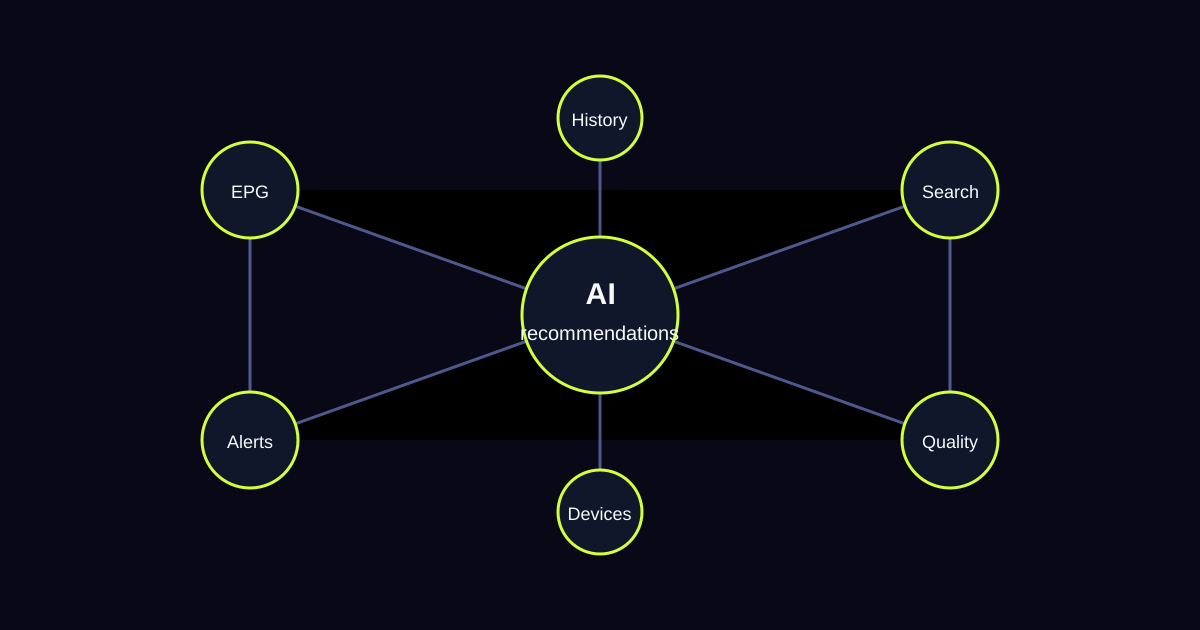
Artificial intelligence has quietly become one of the most important technologies behind modern IPTV and live TV streaming. While viewers see a smoother, smarter experience on screen, the real changes are happening on the backend — where AI handles everything from bitrate optimization to server load distribution in real time.
Here is what AI is actually doing in the streaming industry right now, and where it is heading.
Adaptive Bitrate Streaming Powered by Machine Learning
Traditional adaptive bitrate (ABR) streaming switches between quality levels based on simple bandwidth measurements. When your speed drops, the stream drops to a lower resolution. When it recovers, quality goes back up.
AI-driven ABR goes further. Machine learning models analyze patterns in your connection — time of day, historical bandwidth fluctuations, device capabilities, and even ISP congestion trends — to predict quality drops before they happen.
Instead of reacting to a buffering event, the system preemptively adjusts the stream. The result is fewer mid-playback quality switches and a more stable experience for viewers with moderately stable connections.
Predictive Buffering and Content Pre-Loading
AI-based predictive buffering examines your viewing patterns to pre-load content you are likely to watch next. If you regularly switch from a news channel to a sports channel at 7 PM, the system begins caching that sports feed a few minutes early.
This technique is especially valuable during major live events when server demand spikes. By distributing load across time rather than handling millions of simultaneous requests at kickoff, AI reduces the buffering storms that used to plague big matches.
AI-Powered Server Load Balancing
IPTV providers operate server networks across multiple regions. When a major football match or boxing event goes live, demand can spike 10-50x in minutes.
Traditional load balancing distributes users based on geography or server capacity. AI-driven systems factor in real-time data: current server health, predicted demand curves based on the event schedule, regional bandwidth availability, and even historical data from similar past events.
The AI routes each viewer to the optimal server, not just the closest one. This reduces overload on any single node and keeps streams stable even during peak events.
Automated EPG Generation and Management
Electronic Program Guides (EPGs) are the backbone of live TV navigation. Maintaining accurate EPG data across broad live TV categories in multiple time zones is a massive data management challenge.
AI assists by automatically scraping, validating, and formatting EPG data from multiple sources. When discrepancies appear — a program starts late, a schedule changes — AI systems can update the guide in near-real-time rather than waiting for the next scheduled data pull.
For providers like LumIPTV that offer thousands of channels across 100+ regions, AI-managed EPG keeps the guide accurate without a team manually monitoring every feed.
Content Moderation at Scale
With hundreds of thousands of VOD titles and thousands of live feeds, content moderation cannot be done manually. AI classification systems analyze video metadata, audio tracks, and visual content to automatically tag categories, detect duplicate content, and flag problematic material.
This automation allows providers to maintain clean, well-organized catalogs even as content libraries grow rapidly.
AI-Enhanced Video Encoding
Encoding live video for streaming is computationally expensive. AI-optimized encoders analyze the visual complexity of each scene in real time and allocate bitrate accordingly.
A static news anchor shot needs far less data than a fast-moving football play. AI encoders recognize this and compress low-complexity scenes more aggressively while preserving full quality for high-action moments. The result: better picture quality at lower bandwidth, which directly benefits viewers on slower connections.
Smart Content Discovery
Beyond the EPG, AI helps viewers find content they did not know they wanted. By analyzing viewing patterns — not just yours, but aggregate patterns across similar viewer profiles — AI surfaces relevant channels, shows, and VOD titles.
This is not the "because you watched X" recommendation model from traditional streaming. For IPTV, it extends to live channel suggestions based on what is airing right now and matches your interests. A viewer who watches Premier League on weekends might get a notification about a Champions League midweek match they would have otherwise missed.
Explore the LumIPTV channel lineup to see how broad live TV categories are organized for easy browsing.
Where AI in Streaming Is Heading
The next frontier is real-time language translation of live broadcasts, AI-generated instant highlights during sports events, and fully personalized channel lineups that reshape themselves based on your schedule and preferences.
These are not far-off ideas. Early versions are already being tested by major streaming platforms. IPTV providers that invest in AI infrastructure now will deliver noticeably better experiences within the next few years.
What This Means for Viewers
You do not need to understand the technical details. The practical benefits are simple: fewer buffering events, better picture quality on the same connection, more accurate program guides, and smarter content suggestions.
If you want to experience modern IPTV streaming quality firsthand, check out our blog for more guides or browse the full channel list.
Tired of buffering, dropouts, or poor channel quality?
Try LumIPTV on your own device first. Free 24h trial, no credit card, and 3-day money-back support if you subscribe.