What Is an AI Streaming Agent and Why It Matters for Television
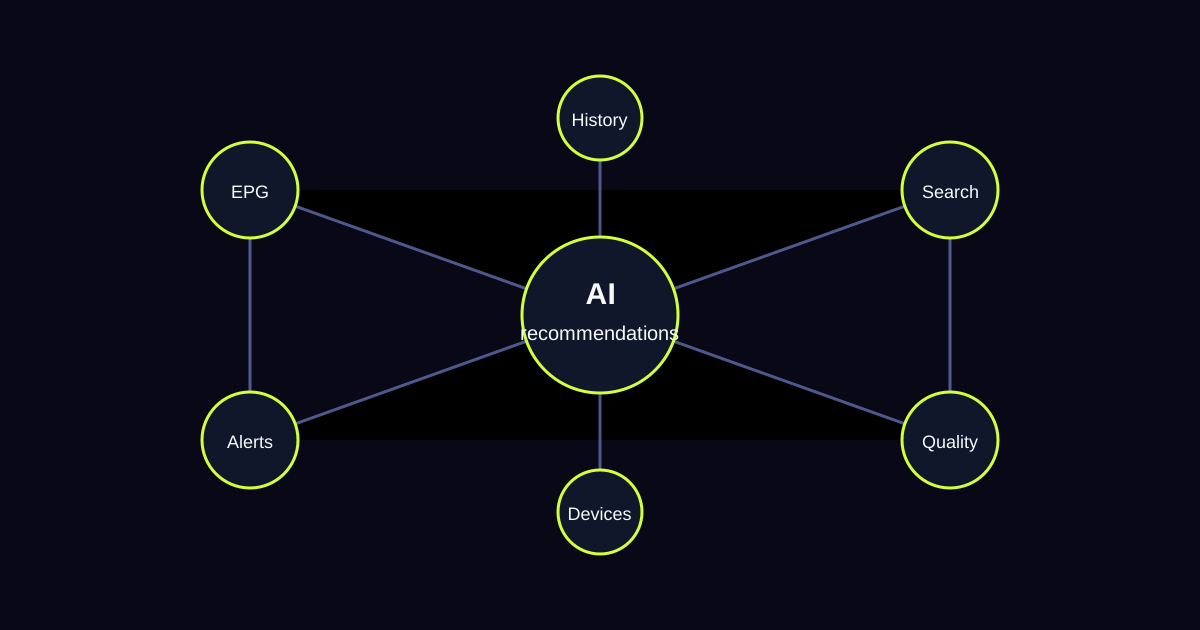
The concept of an AI agent for TV streaming represents the next major shift in how people interact with their televisions. Unlike simple recommendation algorithms that suggest what to watch, an AI streaming agent acts on your behalf — scheduling recordings, switching channels, compiling highlights, and managing your viewing experience proactively.
Think of it as the difference between a search engine and a personal assistant. One answers questions. The other anticipates your needs and handles tasks for you.
What Exactly Is an AI Agent?
An AI agent is a system that can perceive its environment, make decisions, and take actions autonomously toward a goal. In the context of streaming and television, the "environment" is the massive landscape of live channels, VOD libraries, schedules, and your personal viewing history.
A streaming AI agent does not just say "you might like this show." It says "I recorded the match you would have missed, compiled a 10-minute highlight reel, and queued up the post-match analysis for when you get home."
That level of proactive behavior is what separates agents from recommendations.
Auto-Scheduling Recordings Based on Your Interests
Traditional DVR recording requires you to manually find a show and set a timer. An AI streaming agent monitors the entire broadcast schedule and automatically records content that matches your profile.
How this works in practice:
- You watch Premier League every weekend. The agent automatically records any midweek fixtures you might miss.
- A documentary about a topic you have watched before airs on a channel you rarely check. The agent records it and adds it to your watch-later queue.
- A live interview with an athlete you follow appears on a news channel at 3 AM. The agent captures it so you can watch it at breakfast.
No manual schedule scanning. No forgetting to set the timer. The agent handles it silently.
Voice-Controlled Channel Navigation
Voice control already exists on Smart TVs and streaming devices, but current implementations are basic — "Play Netflix" or "Open YouTube." An AI streaming agent takes voice control to a conversational level.
Instead of memorizing channel numbers or navigating menus, you could say:
- "Switch to the best football match happening right now."
- "Find something light to watch for 30 minutes before bed."
- "Show me news channels that are covering the election results."
The agent interprets context, checks live schedules, evaluates your preferences, and makes the switch. It understands "best football match" means a competitive, high-stakes game — not a meaningless friendly.
Personalized News and Sports Digests
One of the most practical applications of streaming AI agents is the automated daily digest. Instead of flipping through news channels or scrolling through highlights manually, the agent compiles a personalized briefing.
A morning sports digest might include:
- Scores from last night's games for the teams you follow
- Highlights of the most exciting plays
- Upcoming matches for the day with start times
- Injury news or transfer rumors from your preferred leagues
A news digest could cover:
- Top stories from your preferred news categories
- Clips from overnight broadcasts you missed
- Breaking developments since you last watched
This transforms the TV from a passive device into an active information assistant that respects your time.
Automated Sports Highlight Reels
Sports highlights are already big business on social media, but they are generic. An AI streaming agent creates highlights that are personal to you.
Watch the full match when you can. When you cannot, the agent generates a highlight reel focused on your team, your favorite players, and the key moments — not a generic 2-minute clip designed for maximum social media engagement.
The technical foundation for this exists. Computer vision can identify key moments (goals, saves, red cards, controversial decisions). The AI agent layers your preferences on top to create a reel that is relevant to you specifically.
How Agent AI Differs from Simple Recommendations
The distinction matters because it affects what the technology can actually do for you.
Recommendation systems:
- Passive — they suggest, you act
- Operate when you open the app
- Based on historical patterns
- Output: a list of suggestions
AI agents:
- Active — they observe, decide, and act
- Operate continuously in the background
- Consider real-time context, schedule, and goals
- Output: completed tasks (recordings made, highlights compiled, channels switched)
Recommendations answer "what should I watch?" Agents answer "what would I want done with my TV while I am busy living my life?"
Cross-Platform Viewing Intelligence
Most people consume content across multiple platforms: IPTV for live sports, Netflix for series, YouTube for clips. An AI streaming agent that operates across all platforms could:
- Track what you have already watched on one platform to avoid suggesting it on another
- Alert you when a show you are watching on VOD has a live special airing on IPTV
- Consolidate your viewing calendar into a single interface regardless of source
This cross-platform awareness eliminates the fragmented experience of juggling multiple apps with separate recommendation engines.
The Connection to IPTV's Future
IPTV is uniquely positioned for AI agent integration because it already operates on internet infrastructure. Unlike traditional cable, IPTV systems can communicate bidirectionally — the server can push personalized content and schedules to your device rather than broadcasting the same signal to everyone.
With broad live TV categories and a broad VOD library, a service like LumIPTV generates the kind of content breadth that makes AI agents genuinely useful. The more content available, the more value an intelligent agent provides in curating and managing it.
Browse the LumIPTV channel categories to see how content is organized, or check out pricing plans to get started with a service built on the infrastructure that supports next-generation streaming features.
When Will This Become Reality?
Elements of streaming AI agents are already appearing in various forms. Voice assistants on Smart TVs are getting smarter. Some platforms already offer basic auto-recording. Highlight generation exists for select sports on major streaming services.
Full agent capability — where a persistent AI manages your entire television experience autonomously — is likely 2-4 years away from mainstream availability. But the foundations are being built right now, and providers investing in intelligent infrastructure will be first to deliver these features to viewers.
The future of television is not about more channels or higher resolution. It is about intelligence that makes the content you care about find you, rather than the other way around.
Tired of buffering, dropouts, or poor channel quality?
Try LumIPTV on your own device first. Free 24h trial, no credit card, and 3-day money-back support if you subscribe.